

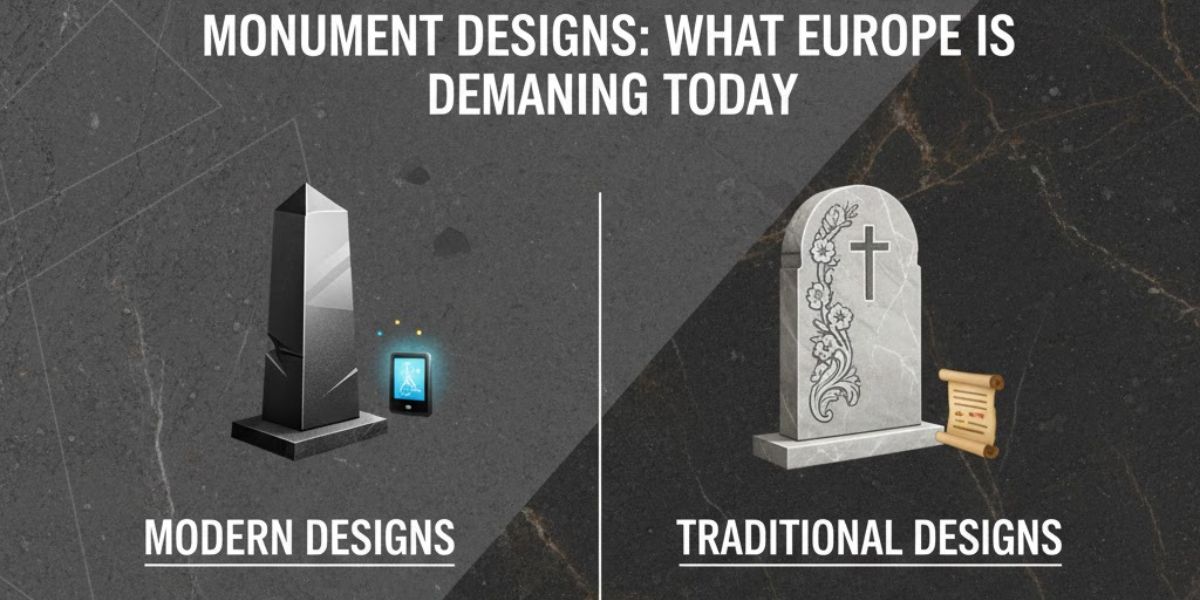
Across Europe, monuments have long served as powerful expressions of collective memory, identity, and values. From grand equestrian statues in historic squares to solemn war memorials etched in stone, traditional monument design has shaped Europe’s visual and cultural landscape for centuries. Yet in recent decades, a noticeable shift has emerged. Increasingly, cities and communities are commissioning monuments that look radically different from the past—abstract, minimalist, interactive, and often controversial. This contrast raises an important question: What kind of monument design does Europe truly demand today—modern or traditional?
The answer is not a simple choice between old and new. Instead, Europe’s evolving preferences reflect deeper cultural, social, and political transformations that continue to redefine how the past is remembered and how public spaces are shaped.
Understanding Traditional and Modern Monument Designs
Traditional monument designs are typically rooted in realism and classical aesthetics. They often feature figurative sculptures—heroes, leaders, soldiers, or allegorical figures—crafted from enduring materials such as marble, bronze, or granite. Symmetry, ornamentation, and recognizable symbolism are key characteristics. These monuments aim to commemorate specific individuals or events clearly and respectfully, leaving little room for ambiguity.
Modern monument designs, by contrast, emphasize abstraction, symbolism, and emotional experience. Instead of depicting a person or event directly, modern monuments may use geometric forms, empty space, light, sound, or unconventional materials like steel, glass, or concrete. Their purpose is often to provoke reflection rather than provide a fixed narrative. Visitors are invited to interpret meaning for themselves rather than being told what to remember.
Context plays a crucial role in determining which approach is chosen. A medieval city center or heritage site may call for traditional aesthetics, while contemporary urban districts or memorial parks often embrace modern expressions.
Europe’s Monument Legacy: A Brief Historical Perspective
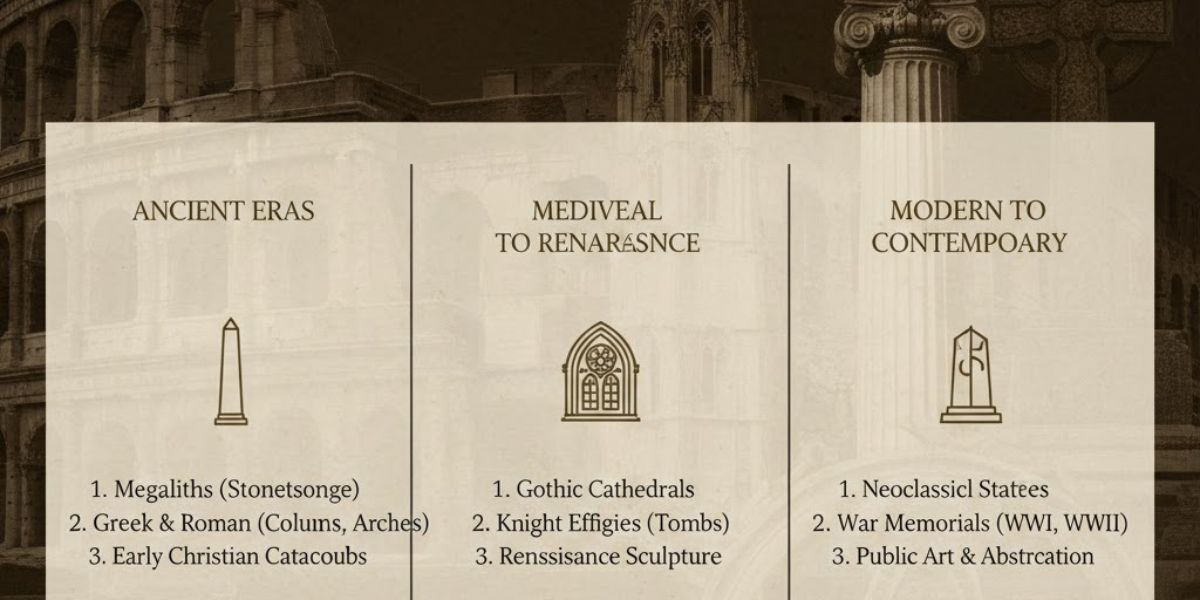
Europe’s deep-rooted tradition of monument building stretches back to ancient Greece and Rome, where statues and triumphal arches celebrated military victories, rulers, and gods. During the Renaissance and Enlightenment periods, classical forms were revived, reinforcing ideals of heroism, reason, and national pride. Well into the 19th and early 20th centuries, monuments largely followed this representational tradition.
The devastation of the two World Wars, however, marked a turning point. As Europe grappled with unprecedented loss, designers began to question whether traditional heroic statues could adequately represent mass suffering and trauma. This led to the rise of abstract memorials that focused on absence, grief, and reflection rather than glorification. Influenced by modernist movements such as Bauhaus and minimalism, monument design became less literal and more symbolic.
Political shifts also played a role. The fall of empires, the rise and collapse of socialist regimes, and post-colonial debates reshaped public attitudes toward historical figures and narratives. Monuments were no longer just about honoring the past—they became sites of contestation.
Aesthetic and Interpretive Differences
Visually, the contrast between traditional and modern monuments is striking. Traditional monuments rely on realism and detail. Their figures are instantly recognizable, and their messages are often explicit: bravery, sacrifice, leadership, or victory. These monuments demand a sense of reverence and often function as focal points for ceremonies and official commemorations.
Modern monuments, on the other hand, communicate through form rather than figurative storytelling. They may consist of stark shapes, voids, or fragmented structures that symbolize loss, memory, or resilience. Materials and technology play a significant role, with designers using lighting, soundscapes, or digital elements to create immersive experiences.
Audience engagement also differs. Traditional monuments tend to be observed from a distance, while modern monuments often invite interaction—walking through them, touching surfaces, or engaging with digital layers. This shift reflects a broader move toward participatory public spaces across Europe.
Cultural and Social Drivers Shaping Demand
Europe’s demand for monument design is deeply tied to its complex cultural landscape. Memory and identity are no longer viewed as fixed concepts. Instead, there is growing recognition of multiple narratives, including those of marginalized or previously overlooked groups.
Public opinion plays a crucial role. Older generations often favor traditional monuments because of their clarity, familiarity, and emotional resonance. Younger generations, however, tend to appreciate modern designs that challenge conventional storytelling and encourage personal interpretation. This generational divide influences municipal decisions and public competitions.
Politics also shapes monument demand. Across Europe, debates about statues linked to colonialism, authoritarian regimes, or controversial historical figures have intensified. In many cases, modern monument designs are seen as a way to acknowledge history without glorifying it. Abstract forms allow societies to address difficult pasts with sensitivity and nuance.
Urban planning and tourism further influence trends. Cities increasingly view monuments as part of their cultural branding. A striking modern monument can become an iconic landmark, attracting visitors and revitalizing public spaces, while traditional monuments reinforce historical continuity.
Contemporary Trends in European Monument Design
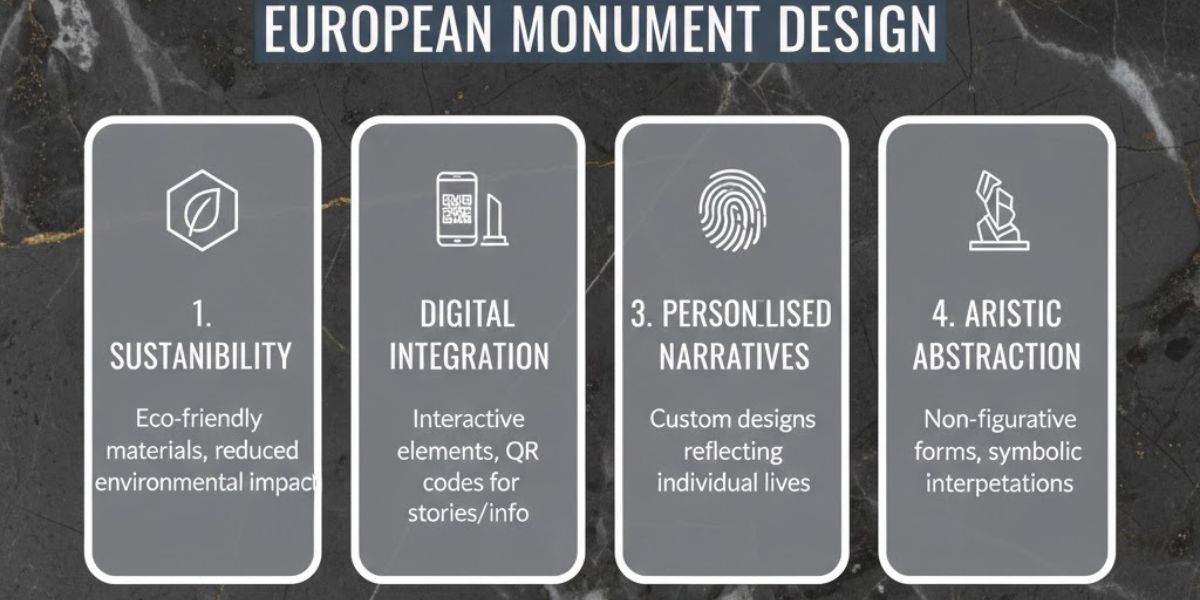
Today, Europe is witnessing a growing preference for hybrid designs that blend traditional and modern elements. Classical proportions or materials may be combined with minimalist forms, creating monuments that feel both respectful and contemporary.
Interactivity is another major trend. Designers are incorporating light installations, sound elements, and even augmented reality to deepen visitor engagement. These features transform monuments from static objects into evolving experiences.
Sustainability has also become a key consideration. Environmentally conscious materials, recycled components, and low-maintenance designs reflect Europe’s broader commitment to sustainability. Monument commissions increasingly consider not only symbolism but also environmental impact.
The commissioning process itself has evolved. Open competitions, community consultations, and multidisciplinary juries ensure that monument designs reflect public sentiment rather than top-down decisions. Digital documentation and 3D scanning further ensure monuments can be preserved and accessed virtually for future generations.
Challenges and Ongoing Criticisms
Despite their popularity, modern monuments often face public resistance. Critics argue that abstract designs can feel cold, confusing, or disconnected from historical reality. Without clear symbolism, some visitors struggle to form an emotional connection.
Traditional monuments are not without criticism either. They are increasingly scrutinized for perpetuating outdated or exclusionary narratives. In some cases, they are viewed as glorifying figures or events that no longer align with contemporary values.
Funding and maintenance also pose challenges. Traditional monuments can be expensive to construct and maintain, while technologically advanced modern monuments may require ongoing technical support. Cities must balance artistic ambition with practical constraints.
What Europe Is Demanding Today
Rather than choosing definitively between modern and traditional monument designs, Europe is demanding balance. There is a clear shift toward monuments that are meaningful, inclusive, and engaging. Communities want designs that respect history while acknowledging complexity and change.
Hybrid approaches are becoming the norm, reflecting Europe’s desire to honor its past without being confined by it. Public involvement, sustainability, and adaptability are now as important as aesthetics.
Ultimately, monument design in Europe is no longer about static remembrance—it is about dialogue, reflection, and shared space.
Frequently Asked Questions
-
What is the main difference between modern and traditional monument designs?
Traditional designs are representational and rooted in classical aesthetics, while modern designs favor abstraction, symbolism, and contemporary materials.
-
Why are modern monuments sometimes controversial in Europe?
They can be difficult to interpret and may not provide a clear historical narrative, leading to public debate and mixed reactions.
-
Are traditional monuments still being built today?
Yes, especially in heritage contexts or where public sentiment favors recognizable figures and historical continuity.
-
What trends dominate current European monument design?
Hybrid designs, sustainability, interactivity, and community-driven concepts are increasingly common.
-
Can modern monuments become future heritage sites?
Absolutely. As societies evolve, modern monuments can become iconic symbols of their time.
Conclusion
The debate between modern and traditional monument designs in Europe reflects far more than artistic preference. It mirrors broader conversations about history, identity, and collective memory. As Europe continues to evolve, its monuments are becoming less about fixed narratives and more about shared reflection. By blending tradition with innovation, Europe is redefining what it means to remember—and how public spaces can tell stories that resonate across generations.