

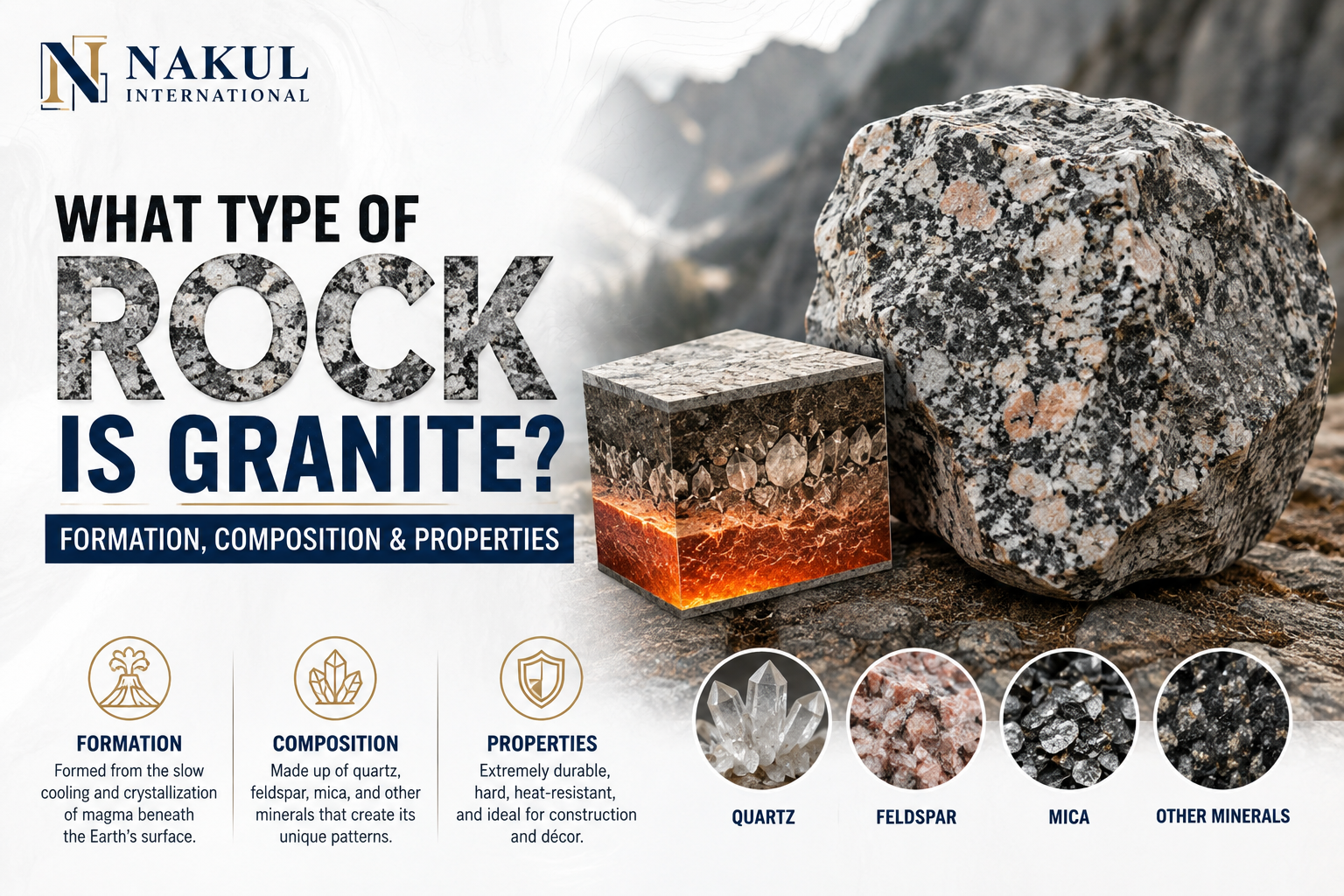
Do you know that granite is a widely recognised natural stone for commercial, residential architectural & interior design? You may see granite on kitchen countertops, granite on monuments, walls, flooring and building structures. But do you think: what type of rock is granite and how does it form naturally? This is an igneous rock, especially an intrusive igneous rock; this is the form that forms deep beneath the Earth’s surface when molten magma cools and solidifies slowly. This slow cooling process gives granite that makes it the strongest and most durable natural stone.
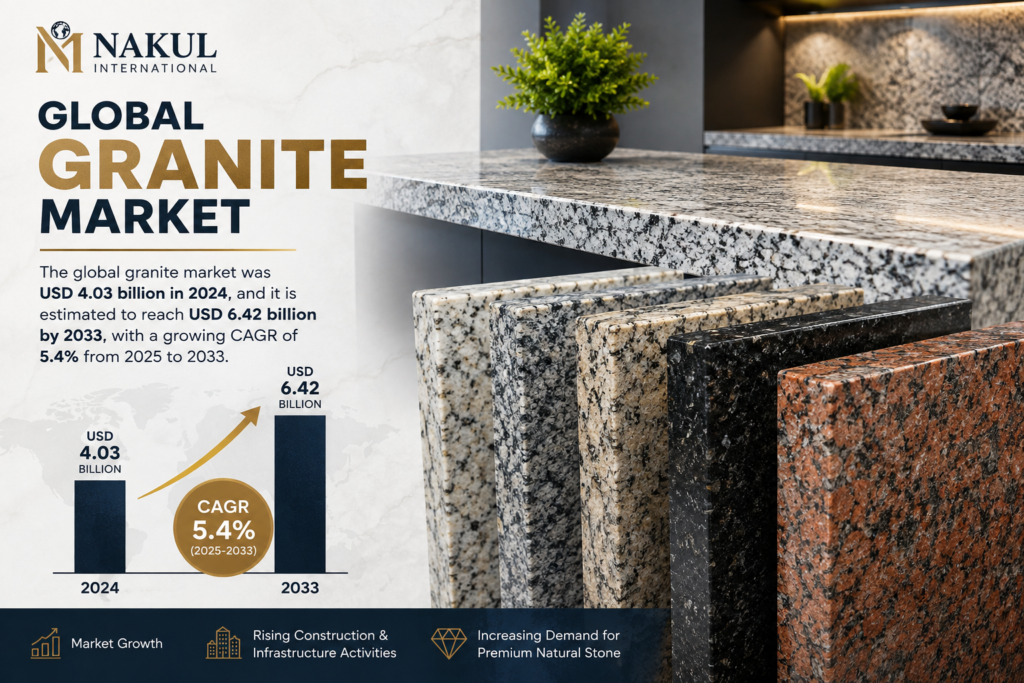
If you want to know what type of rock granite is, its formation, composition & properties, you are on the right track. In this detailed article, we will explore everything you need to know. Stay tuned with us: as per the study by Grand View Research, the granite market size was USD 4.03 billion in 2024, and it is estimated to reach 6.42 billion by 2033, with a growing CAGR of 5.4% from 2025 to 2033.
What Type Of Rock Is Granite?
Granite is a type of igneous rock. It forms when magma solidifies at a slow rate below the ground instead of on the Earth’s surface.
Since magma takes time to cool, large mineral crystals form. Therefore, granite typically has a grainy or speckled look.
- Category: Igneous rock
- Type: Intrusive igneous rock
- Form: Efflux of magma at low temperature
- Nature: Coarse-grained
- Appearance: Dotted and crystalline.
How Does Granite Form?
Granite is formed due to the rise of hot magma from the mantle’s depth into the crust. Due to the process and gradual decrease in temperature, the magma is cooled and solidified. The process itself is long-lasting, resulting in crystals appearing in the magma.
The steps in the formation of granite can be described as follows:
- Magma rises from deep underground
- Magma is cooled slowly
- Crystals appear
- Magma solidifies into granite
- Erosion and geological activity make the rocks appear on the Earth’s surface.
What Is Granite Made Of?
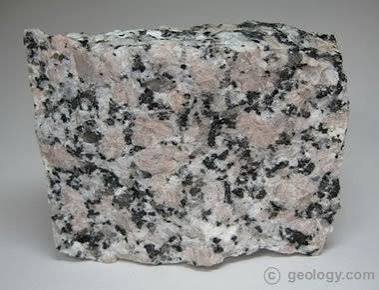
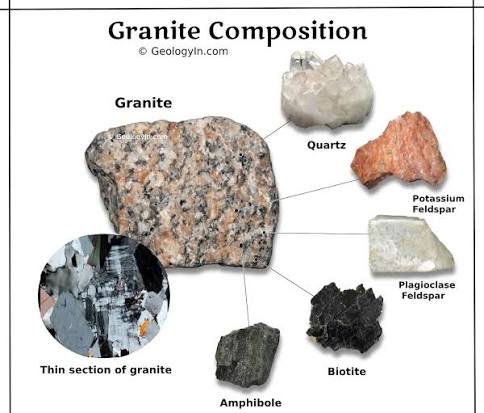
Granite is made up of several minerals, and the most common minerals found in granite are quartz, feldspar and mica. The exact combination of these minerals depends. That’s why granite comes in different color patterns.
Feldspar is usually one of the larger constituents that you see in granite; quartz gives it the hardness and resilience. Mica and other minerals might add some darker colours and the patterned look we often associate with granite. Here are the common minerals included:
- Quartz
- Feldspar
- Mica
- Amphiboles
- Other minor minerals
Why Does Granite Have Different Colours?
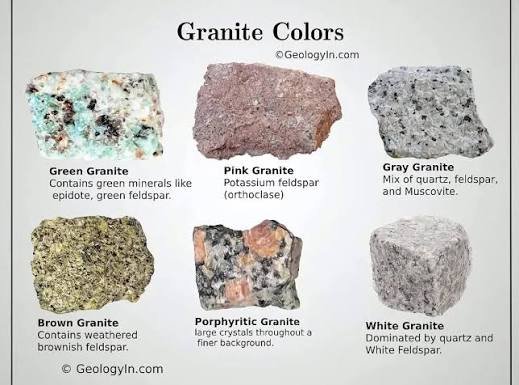
Granite is available in various colour patterns such as white granite, black granite, pink granite,red granite and brown granite. Their colours mainly depend on the types and proportions of minerals present in the rock.
Some minerals, such as feldspar, can contribute pink or white, as well as other colours, and some more dark colored rocks can turn grey or black, like those involving mica or amphiboles. All of this causes all the types of rocks to look distinct in terms of colour. Granite appearance can include:
- Dark & light backgrounds
- Coarse or fine patterns
- Mineral black specks
- Pink or reddish tones
What Are The Main Properties Of Granite?
Granite offers you value in terms of strength, durability, and resistance to everyday wear. Its mineral composition and crystalline structure make it suitable for every application where needs strong and long-lasting natural stone is required.
It also has considerable resistance to scratches, heat, and wear in general. However, granite is still an in organic material that may need proper maintenance regarding the place of its installation.
Key characteristics include:
- High durability
- Good hardness
- Heat resistance
- Scratch resistance
- Low to moderate porosity depending on the type of stone
- Natural colour and variety of patterns
Why Is Granite Considered A Strong Natural Stone?
Granite is well known for its durability, strength and mineral composition, because its crystals interlock as magma cools down. This creates a dense rock that can withstand considerable everyday use. Because of its durability, granite is chosen by every homeowner and builder to enhance the appearance and performance. This is widely used for:
- Kitchen countertops
- Flooring
- Wall cladding
- Stairs
- Building facades
- Monuments
- Outdoor applications
Where Is Granite Commonly Used?
Granite is a natural stone used for centuries for its durability, aesthetics, and architectural applications. It combines natural appearance with practicality and durability. Also, granite is used for countertops, kitchens, bathrooms, flooring and decorative surfaces. In most commercial outdoor projects, granite can be used for walls, paving, stairs and building features. Also, choosing a leading granite manufacturer in India helps you to make your space aesthetic and customised.
What Things Should You Know About Granite Before Choosing & Best Granite For You?
If you want to choose granite for renovating your home or a commercial project, it is best to understand both appearance and physical properties. Here are various Indian granite varieties offered by Nakul International. They help you to make the right choice of where the stone can be used and what type of appearance you want.
- North indian granite
- South Indian granite
- Granite gangsaw slabs
- Granite cutter slabs
- Granite tiles
- Granite blocks
People Also Ask About What Type of Rock Is Granite? Formation, Composition & Properties
Q.1 Does granite contain mica?
A: Granite contains mica, with company include biotite or muscovite. This appears as shiny, flaky crystals and contributes to granite’s colour and sparkling appearance.
Q.2 How does granite get its colour?
A: Granite gets its colours from natural minerals. Various minerals like Quartz, feldspar, and mica can provide aesthetic colours to granite such as white, grey, pink, red, brown, or black.
Q.3 Why is granite sometimes white?
A: Granite sometimes shows white because it contains a huge amount of light-colored quartz and feldspar with a few dark minerals.
Q.4 What are the main properties of granite?
A: The main properties of granite are hard, durable, scratch-resistant, and relatively resistant to heat and weathering. The exact properties of granite vary by its minerals and composition.
Q.5 How long does granite last for commercial applications?
A: Natural granite can last up to 50 to 100 years in commercial applications when it is properly installed and maintained. And also lifespan depends on the granite quality and environmental conditions.
Q.6 How can I identify pure granite?
A: When you want to identify granite, you need to ensure its visible interlocking crystals, light appearance, and typical mix of quartz, feldspar, and mica. For more precise identification, you may need to perform a geologist or laboratory test.