

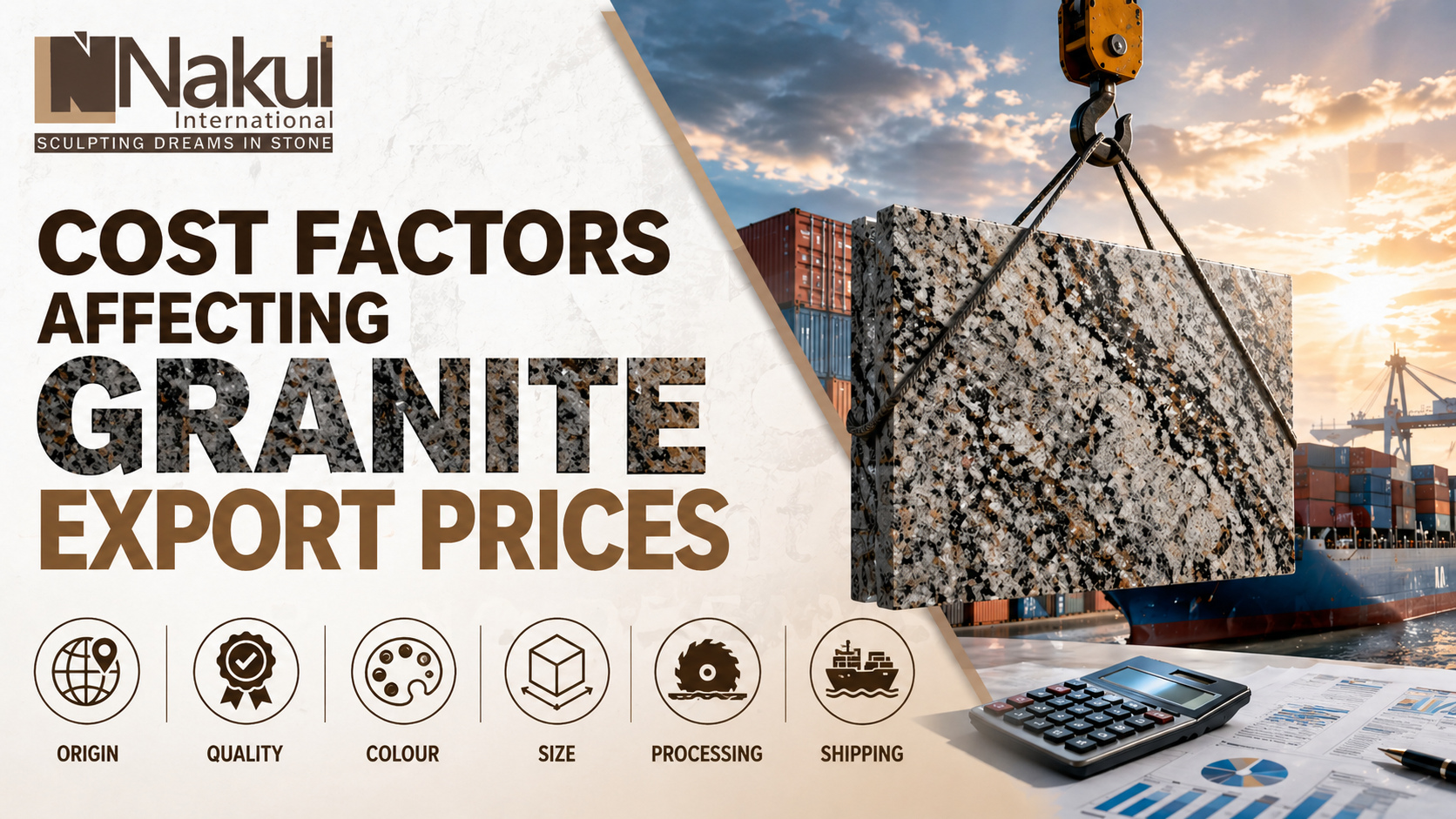
Cost factors like the granite origin, quality, size, colours, pattern, extraction process, packaging, market demand, shipping and processing can affect granite export prices significantly. Granite prices are highly volatile and competitive in the global natural stone industry. For buyers and importers, understanding all the cost factors that affect the prices is important to make better decisions and purchases. However, for exporters, it is even more important because they need to optimise their pricing while maintaining the quality.
One of the most reputable manufacturers, suppliers, and exporters of granite is Nakul International, which offers a wide range of high-quality granite stones. The company needs to carefully manage and understand these cost factors. Therefore, this blog about Cost Factors Affecting Granite Export Prices will help you understand what cost factors play a major role and how they can affect the final quote prices that are offered to buyers.
Table of Contents
ToggleUnderstanding the Granite Export Prices
Granite export prices do not depend on the stone, instead it depends on various other factors, such as quarry extraction, rarity, shipping costs, and more. When it comes to granite, the actual cost of the stone is only a portion of the final price, while the shipping, processing, and other charges add more to the price.
Export pricing can be set by calculating prices in various stages, such as:
- Quarrying and raw block extraction
- Processing and finishing
- Packaging and handling
- Transportation and logistics
- Export documentation and compliance
Every exporter and buyer needs to understand these stages that take place during the granite manufacturing and exporting.
Major Cost Factors Affecting Granite Export Prices
Below are some of the cost factors listed that affect the granite export prices and change the final amount by significant numbers. All the exporters, suppliers, and buyers need to understand this to optimise their pricing accordingly, or they may face severe losses.
1. Origin of the Granite
This is one of the most cost-affected factors that can change the total price. One of the most significant factors affecting granite export prices, which is the type and origin of the stone.
- Granite stones are sourced from quarries
- Rare colours such as exotic colours or unique patterns are also alot more expensive
- Stones that have low availability can cost alot
Some of the granite types that are sourced from various established regions in India, such as Rajasthan or Karnataka, offer a much better reliability.
2. Quality of Granite
Granite can be classified in various forms, such as commercial, standard, and premium. These grades can also impact the final pricing.
- Commercial grade costs very low
- Standard have better quality but cost more
- Premium granite are reliable, superior and expensive
Premium is one of the most expensive ones because they undergo stricter quality tests, and the selection process is tougher.
3. Colour, Pattern, and the Rarity of Granite
The aesthetics of any granite, the colour, and the pattern can be really rare, which can affect the price. There are various colours and patterns available in granite stones, depending on the budget.
- Many solid colours are usually cheap
- Complex patterns can cost a lot
- Rare shades like blue, green, or red cost more
Granite with unique patterns is also considered a luxury, which can cost higher than usual.
4. Size and Thickness
Granite prices can also depend on the size, thickness, and type. Here are some of the granite types listed below:
- Rough blocks are cheap
- Slabs are moderately priced
- Tiles or cut-to-size pieces are costly
Thickness also plays a role:
- 2 cm slabs are more suitable
- 3 cm slabs are more durable
Larger slabs require more material and more processing, so naturally, it costs way more than regular granite stones.
5. Processing and Finishing Costs
Processing and finishing is one of the biggest cost factors affecting granite export prices as the price can vary depending on the size of the stones, which can later affect the export pricing.
Key cost components are:
- Cutting and polishing
- Surface finishing
- Edge finishing and other customisation
Different finishes can also affect the cost of your granite:
- Polished finish is standard and affordable
- Leathered finish is affordable and better
- Flamed or textured finishes are expensive
Additional processing can also increase the price of labour and machinery, which can increase the export pricing.
6. Quarrying Costs
Every granite begins at the quarrying stage, where the extraction takes place, and these extraction costs can play an important role. at the quarry,
Factors that can increase the costs by various things like:
- Labor wages and availability
- Equipment and technology used
- Geological conditions and accessibility
- Environmental compliance costs
7. Transportation and Shipping Costs
Transportation and shopping can also be one of the major cost factors affecting granite export prices. These costs are also volatile and include various shipping costs such as:
- Inland transportation
- Port handling charges
- Ocean freight rates
- Container rate if it’s available
Shipping costs can be high and incur major fluctuations, which can impact the export prices.
8. Packaging and Labour
Granite is a natural stone that is heavy and fragile; packing and handling these stones require experience, which can involve labour and packaging costs.
Export-grade packaging typically includes:
- Fumigated wooden crates for granites
- Foam protection and separators for granites
- Reinforced edges and corners for the granite stones
Proper packaging reduces the risk of damage during transit. However, making high-quality packaging is an investment, but it can increase the export prices as well.
9. Market Demand
The global demand plays an important role, and it can also affect the granite prices as per the changes that can occur anytime.
- Increased construction activity can increase the demand
- High demand can change the prices, and it often becomes expensive
- Countries like China and Brazil affect the price due to increasing competition
Conclusion
Granite export pricing is highly volatile, and there are various reasons behind this pricing structure. From quarrying to shipping costs, every stage and factor contributes to the final cost, and every exporter, supplier, and manufacturer needs to know how to optimise their prices and maintain the margins. However, these factors also help buyers in making the process transparent, along with proper documentation.
Therefore, if you are looking for a reliable granite exporter, manufacturer, or supplier. Nakul International is a reliable granite manufacturer & exporter that offers a wide range of high-quality granite, including tiles. By ensuring reliability, consistency, and value for both international and domestic markets, the company stands out as one of the most trusted granite slabs, tiles, or custom-cut stones supplier.
Frequently Asked Questions:
1) What are the main factors affecting granite export prices?
Granite export prices depend on multiple factors such as origin, quality, colour, pattern, size, thickness, quarrying costs, processing, packaging, transportation, and global market demand. Each stage adds to the final cost.
2) Why do granites from different regions have different prices?
Granite sourced from established regions like Rajasthan or Karnataka often offers better consistency and quality. Rare or limited-availability stones from specific quarries are usually more expensive due to higher demand and lower supply.
3) How does granite quality impact pricing?
Premium-grade granite is more expensive because it undergoes stricter quality checks, has fewer defects, and offers better durability and finish.
4) Does shipping significantly affect granite export costs?
Yes, shipping is one of the most volatile cost factors. Ocean freight rates, container availability, inland transport, and port charges can fluctuate and significantly impact the final export price.
5) Why should I choose Nakul International for granite exports?
Nakul International is known for delivering high-quality granite with consistent standards. The company ensures competitive pricing by managing sourcing, processing, and logistics efficiently, making it a reliable choice for global buyers.
6) Does Nakul International offer customised granite solutions?
Yes, Nakul International provides customised granite solutions, including slabs, tiles, and cut-to-size products. The company focuses on meeting specific client requirements while maintaining quality and cost efficiency.