

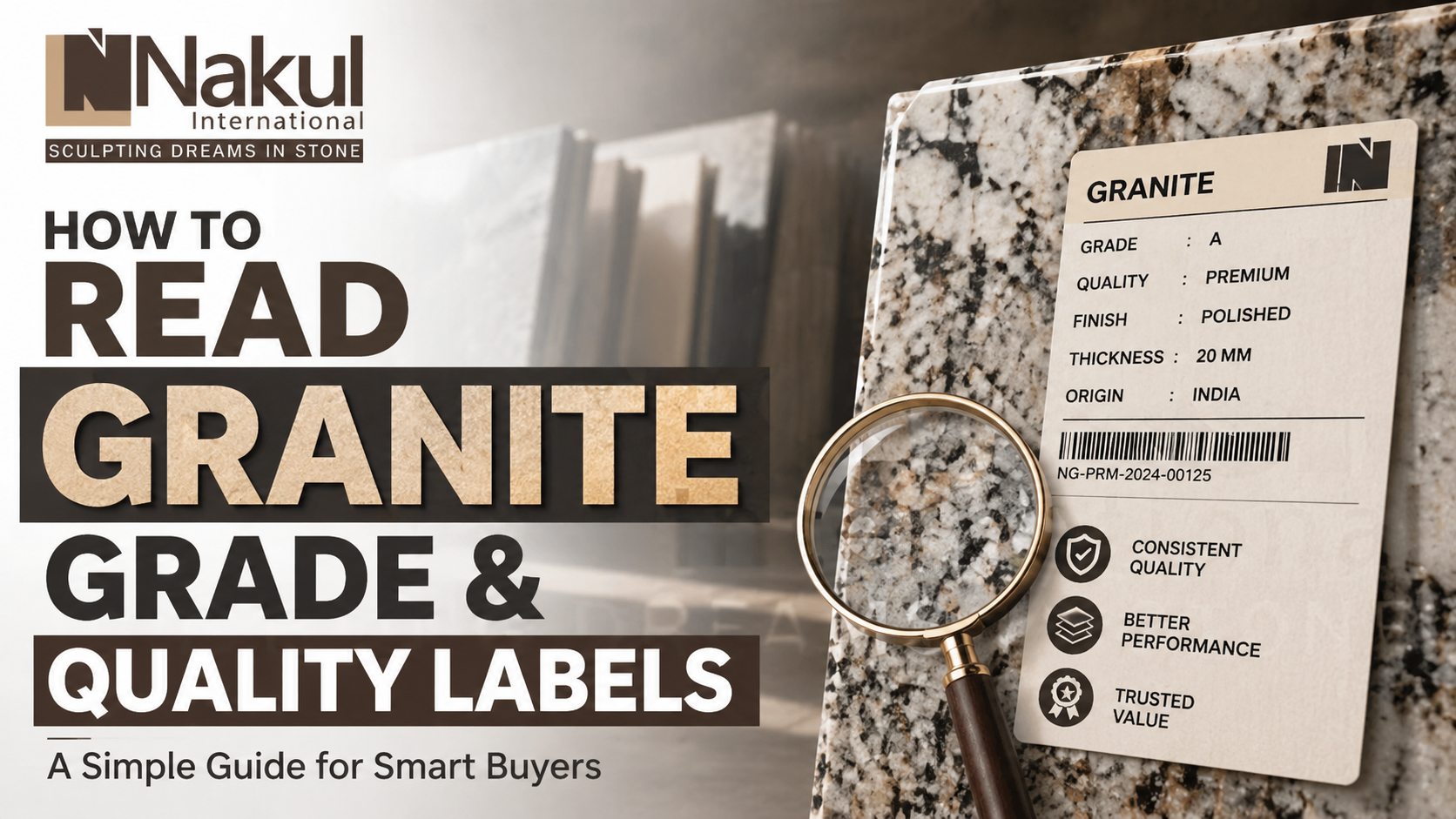
The global stone market has a lot of competition, and every company that manufactures granite offers neck-to-neck competition to other companies. In such a competitive market, understanding granite quality, grade, and other technical concerns can be really beneficial and turn out to be an advantage for your business. Many buyers, contractors, and distributors rely on checking the granite grade and quality labels mostly to make all the quick buying decisions. However, this is one of the top mistakes that buyers make when buying granite, and it can cost you a lot.
This is exactly why businesses prefer working with reliable granite suppliers so that they can rely on the quality without having to check every piece each time. Therefore, reading the granite grade and checking the quality labels is something that every buyer should know of, as it ensures reliability, builds trust, and also prevents you from making deals with an unreliable granite supplier.
Therefore, this blog about how to read granite grade and quality labels provides all the information to help every buyer understand these valuable labels to make a mindful decision.
Table of Contents
ToggleWhat Are Granite Grades?
Granite grades are basically a type of certification that is given on the basis of quality, color, pattern, thickness, and origin. These grades can help buyers in making the right purchase by providing a quick overview of the stone. Moreover, these granite grades can be classified into three possible categories.
What Are the Different Types of Granite Grades?
Granite grades include three types of categories: Commercial grade, Standard grade, and a Premium grade, which are also often known as the Level 1, Level 2, and Level 3+ granite categories. These grades can help a buyer by ensuring quality, thickness, colours, pattern, and more.
Below are all the types of granite grades explained:
1) Commercial Grade (Level 1)
- Basic quality
- May have defects or irregularities
- Cost-effective and budget
2) Standard Grade (Level 2)
- Balanced quality
- Moderate balance colour and pattern
- Suitable for residential projects as well
3) Premium or High Grade (Level 3)
- Superior quality and perfect patterns
- No defects or irregularities
- Ideal and mostly used for luxury projects
Every buyer needs to understand these granite grades, as they can inform and ensure trust and reliability.
What are the Factors that Affect Granite Grades?
There are several factors that can affect the granite grades and change their classifications. Here are some of the factors listed below:
- Colour Consistency
- Pattern and Grain Structure
- Surface Finish
- Thickness and Size Accuracy
- Defects
What are Quality Labels on Granite?
Granite quality labels are beyond grading as these labels include multiple details such as origin, colour name, finish type, dimensions, batch number and quality overview. Therefore, reading quality labels is also highly recommended for buyers who are looking to buy granite.
Some of the typical Information that is mentioned on labels:
- Origin, such as country or quarry location
- Colour name, such as the commercial name used in the market
- Finish type, such as polished, honed, flamed, etc.
- Slab dimensions, such as the length, width, and thickness
- Lot or batch number that is important for consistency in bulk orders
Why Does the Origin of Granite Matter?
The origin of granite can matter a lot as different regions can different regions varies in:
- Mineral composition
- Density and strength
- Color stability
For example, Indian granite is widely used and preferred because of its durability and wide colour range.
How to Inspect Granite Before Purchase?
Below is a proper checklist provided for buyers who are buying granite and want to make a mindful purchase, along with reading granite grade and quality labels.
Inspection Checklist
- Choose a reliable granite supplier
- Check if the granite packing is tough, intact and solid
- Make sure to read the granite grade
- Check quality labels
- Check slabs under proper lighting
- Compare multiple slabs from the same batch
- Run your hand across the surface for smoothness
- Inspect edges for chipping
- Verify thickness using measuring tools
Some Tips for Granite Buyers and Importers
Here are some important tips for buyers and importers when buying granite:
- Do not rely solely on grade labels
- Always verify physical characteristics
- Request detailed specifications and images
- Choose a reliable granite manufacturer or supplier
- Maintain consistency by ordering from the same lot
- Build long-term relationships with reliable suppliers
These tips will help you avoid unnecessary losses and disputes, and partnerships with unreliable granite suppliers.
Conclusion
Nowadays, in the global stone market, there is increasing competition between various companies. Many unreliable suppliers often commit wrongdoings when it comes to the quality of granite stone to make extra profits, which leads to the buyer’s loss. This is why reading the granite grade and checking the quality labels has become highly important. These labels can provide a quick quality check to the buyer, which can ensure trust and reliability.
Therefore, in the blog above, you will learn how to read granite grade and quality labels, which can help you make a mindful decision and prevent disputes or losses. Moreover, partnering with a reliable granite manufacturer, supplier, and exporter like Nakul International can also be one of the smartest options, as it eliminates the risk of many losses.
Frequently Asked Questions About How to Read Granite Grade and Quality Labels
1) Are granite grades a reliable indicator of quality?
Granite grades can provide a general idea of appearance, finish, and consistency. Moreover, they can help ensure a valid purchase for the buyer.
2) What is the difference between commercial, standard, and premium granite?
Commercial grade offers basic quality with more variations and minor defects. Standard grade provides a balanced appearance and consistency. Premium grade offers superior looks, minimal irregularities, and is ideal for luxury projects.
3) Why is it important to check granite quality labels?
Quality labels include key details such as origin, dimensions, finish type, and batch number. These details help ensure consistency, transparency, and better decision-making, especially for bulk purchases.
4) How can Nakul International help with granite importing?
Nakul International ensures consistent quality, accurate grading, and proper documentation. By working with an experienced exporter, buyers can reduce risks related to defects, delays, and miscommunication.
5) Why should buyers choose Nakul International as a supplier?
Nakul International offers reliable sourcing, strict quality checks, and professional handling of orders. This helps buyers maintain consistency across projects and build long-term, trustworthy supply chains.
6) What is the best way to avoid mistakes when buying granite?
Avoid relying only on grades, inspect slabs carefully, verify supplier credibility, and ensure proper documentation. Make sure to build relationships with trusted suppliers as well.