

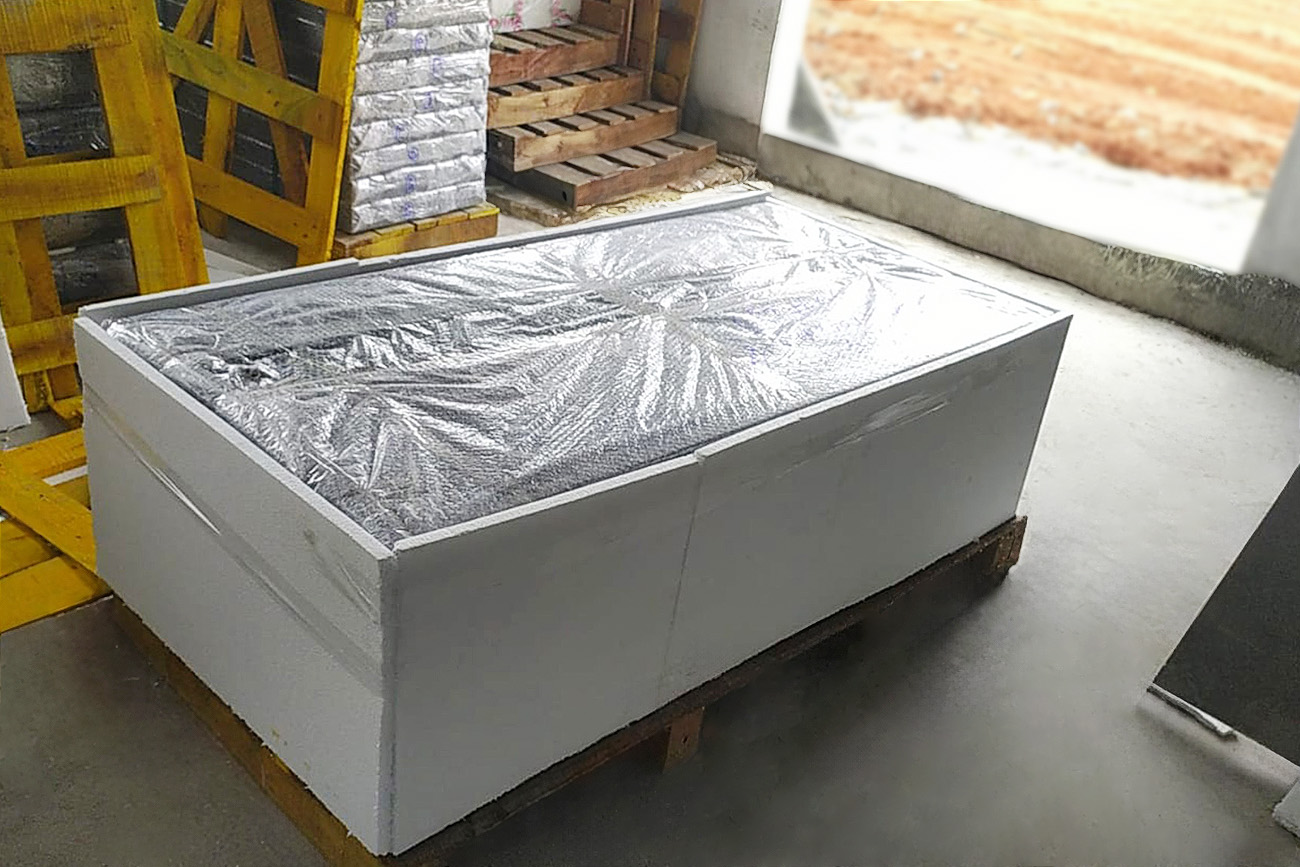
Understanding the packaging process of granite slabs for export is crucial for buyers, importers and construction professionals. During long distance shipping, proper packaging can preserve the stone’s quality. To prevent breakage and maintain the finish, proper packaging is vital. In this blog, Nakul International will provide you with everything you need to know about How Granite Slabs Are Packed for Export, their importance and the complete process.
Why Proper Packaging is Critical for Granite Export
Granite Slabs go through a very long trip before they get to the final customer. They will be handled at the factory and then moved on to the shipping process and each step will add many different types of risks. Proper packing will help to minimise the risk of any type of breakage or cracks while they are on the road. Packing properly will also help to protect the polished surface from scratching minimise the chance of edge damage and ensure that the granite slabs remain intact before, during and after they are loaded/unloaded from the truck.
Pre-Packing Process: Quality Inspection & Preparation
Granite slabs undergo several processes before the actual packing takes place so that high-quality granite materials are the only ones shipped out for export.
Quality Inspection
Before packing each granite slab, the following is inspected for quality:
- Any cracks or fractures
- Consistency in color
- Accurate thickness and size
Only slabs that meet the export standard are selected.
Cleaning And Drying
- Dust, slurry and residue must be cleaned off the slab
- Slabs must be completely dried to prevent moisture damage
Sorting and Labelling
- Granite slabs will be sorted according to size, colour, and order requirements.
- Granite slabs should be identified with a label that makes identifying them easy when unloading.
Step-by-Step Process of Packing Granite Slabs for Export
- Wrapping Slabs
The initial step in packing is wrapping each slab separately.
- Use plastic sheeting or stretch film to cover the slab’s surface.
- Foam or bubble wrap creates cushioning.
- A layer of foam protects slabs from damage from scratches, dust, and moisture.
- Protecting Slab Edges
Granite slabs are most susceptible to damage at the edges. To protect against edge damage:
- Use a rubber or thermocol corner guard on the corners of the slabs.
- Reinforce the edges with protection on the outside of the slabs.
- Minimise the risk of edge chipping during handling.
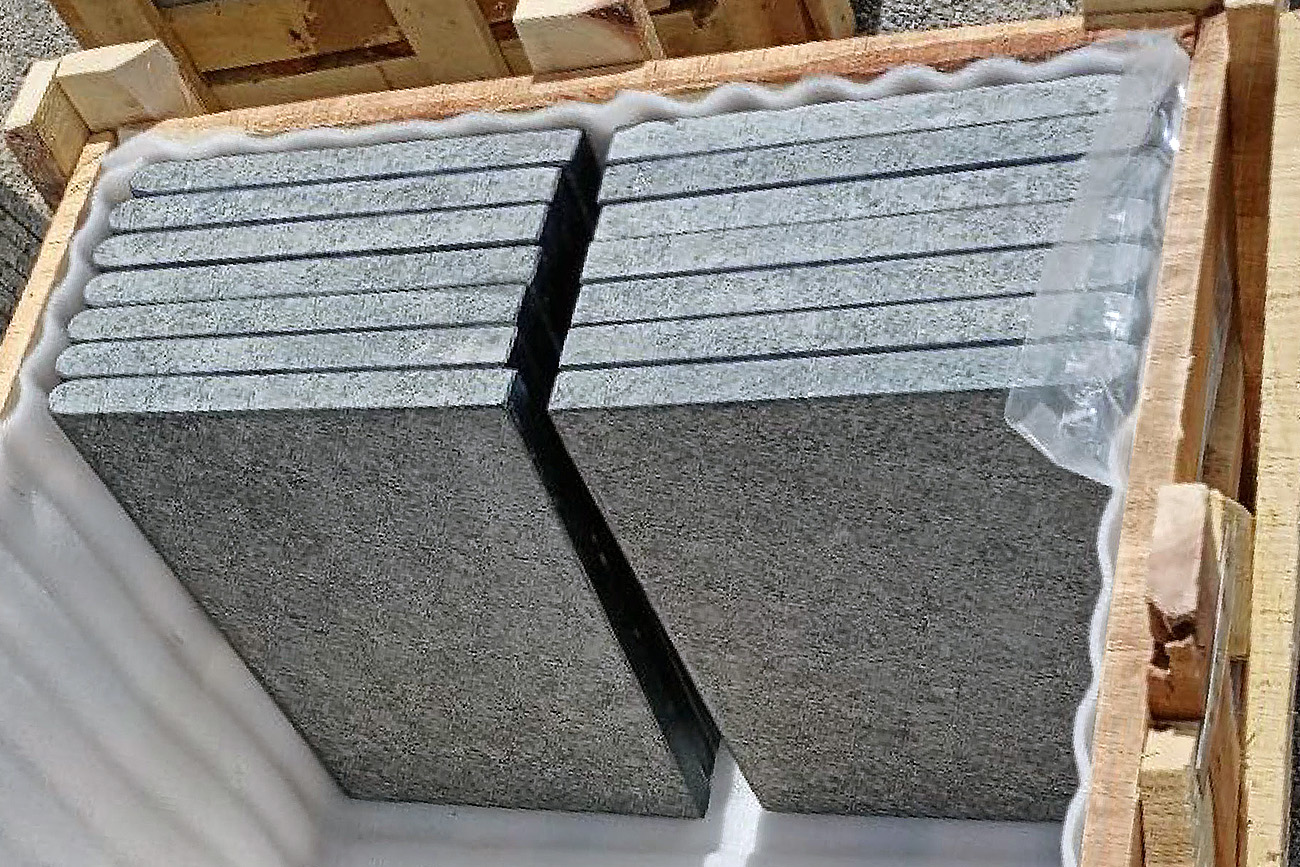
- Stacking of Slabs
Proper stacking of slabs is critical in order to avoid damage when applying pressure.
- Stack slabs vertically rather than horizontally.
- Insert spacers or separators between slabs.
- Distribute the weight evenly across the slabs to limit stress to individual slabs.
- Wooden Crate
After completing the stacking process, the slabs are securely fastened together in a strong, wooden crate.
- The wooden crates must be made of high-quality, fumigated wood.
- Crates must be able to support heavy loads and must provide structural integrity and to keep the granite slab from being damaged due to outside forces.
- Strapping Sealing the Crate
To provide maximum security:
- Crate contents will be strapped together using either metal or plastic straps.
- Seals should be properly applied to the crate to prevent movement of crate contents during shipment.
- This final step will prevent the crate from moving during shipment
Materials Used in Granite Export Packaging
Some of the materials that are used in packaging and shipping granite slabs include:
Wooden Crates – Will give strength and support to the slabs
Plastic Sheeting – Will protect the slabs from moisture and dust
Foam Sheets or Thermocol – Cushion slabs from scratches
Metal Straps – Hold the crates tightly
Waterproof Covering – Will protect the slabs from humidity and water damage
What are the Common Mistakes to Avoid in Granite Packaging?
Mistakes made while packing granite slabs can cost the company a lot of money due to damaged or lost shipments. Examples of common mistakes made when packing granite slabs include:
- Using poor quality or untreated wood
- Not protecting slab edges properly
- Packing the slabs incorrectly
- Packing too many slabs into one crate
- Not adding a moisture barrier
Properly labelling your shipment of granite is essential for exporting granite successfully.
How Nakul International Ensures Safe Granite Packaging?
Nakul International is known for its dedicated and trustworthy packaging process, using its decades of experience exporting granite and marble.
- Detailed quality inspection before packing
- Use of premium export grade materials
- Strong and durable wooden crating
- Skilled handling during loading
- Focus on delivering damage free products worldwide
What are the Key Benefits of Professional Granite Packaging for Buyers?
Minimise damage: The use of fumigated, sea-worthy wooden crates, foam padding, and plastic wrapping helps eliminate scratches, cracks, or edge-chips during transport.
Protect from moisture: Waterproof plastic will minimise the possibility of “container sweat” and any water that can cause water or discolouration damage.
Reduce potential losses: Proper packaging minimises the possibility of material breakage during transport, resulting in decreased insurance claims, decreased replacement costs and fewer shipping delays.
Compliance with international shipping requirements: Professional packaging companies utilize ISPM-15 heat-treated wood to ensure an easy and trouble free customs clearance, resulting in no fines or rejections at the port.
Easier handling/storage: Goods in secure crates are easier to manage during inventory and can be loaded/unloaded in a safer manner.
Maintain the quality of the materials used: Protective layers placed between polished surfaces will prevent any friction from developing between polished surfaces, effectively maintaining a high gloss finish.
Conclusion
To sum up everything that has been stated so far, the above given information on the topic “How Granite Slabs Are Packed for Export” states everything you need to know about the Packaging of granite slabs for export, why proper packaging is crucial, the packaging process and common mistakes to avoid. If you are looking for quality and durable granite solutions, contact Nakul International today by dialling +91 8618284386 or emailing info@nakulinternational.com. Our customer support team will assist you.
FAQs About Granite Slabs Packaging for Export
Question. What materials are used to pack granite slabs for export?
Answer. Commonly used materials for packing granite slabs for export include: plastic sheets, bubble wrap, foam or thermocole, wood crates, metal strapping and waterproof covering, so that they are protected from scratches, moisture and impact.
Question. What type of containers are used for granite slab export?
Answer. The containers that are typically used to export granite slabs are commonly 20-foot containers. Because granite has such a heavy weight, exporters may use either closed containers or open-top containers based on the shipments being made to make loading easier.
Question. How are granite slabs arranged inside crates?
Answer. Typically, granite slabs will be arranged inside of crates in A-frames or bundles and will have separators placed between each slab to prevent contact between individual slabs, which would help to prevent scratches and/or cracks.
Question. How long can granite slabs remain safe inside export packaging?
Answer. Granite slabs can remain safe for several weeks to months if properly packed with high quality materials during international transport if they are properly packaged.